Insider Discussion – Why Real Estate Investing Is NOT Passive Income
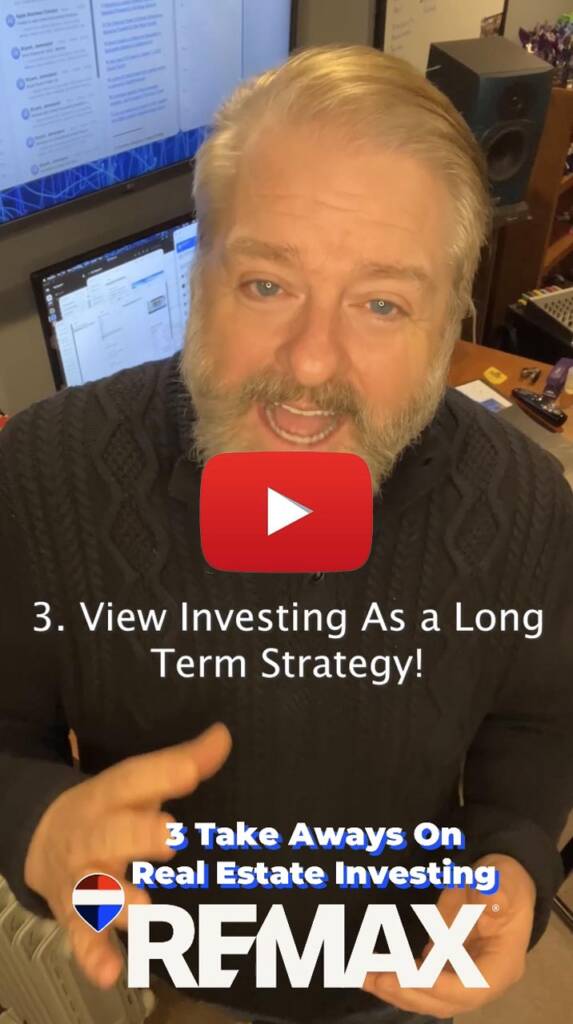
Insider Discussion – Why Real Estate Investing Is NOT Passive Income
Real Estate Investing Should Be Viewed As a Long Term Strategy
Many new investors approach real estate investing as a source of quick passive income, but sustainable success comes from long-term ownership, disciplined buying, low leverage, careful tenant screening, and focusing on appreciation and payoff over time rather than monthly cash flow.
I hope this information was helpful! If you are considering buying or selling a home, I would love to talk to you. I am a seasoned agent with over 24 years of experience in the local real estate market. I would love to be able to get you the financial result you desire from your current home to get you in to that Dream Home! Don’t hesitate to call me anytime at 260-579-1516 or you can email me at mike@mikearchbold.com.
Real Estate Investing: Why It’s Not Passive Income (And What Actually Works)
There’s a lot of social media noise around real estate investing being “passive income.” Buy a house. Rent it out. Collect checks. Build wealth effortlessly.
That’s not how it works.
I’m part of an investment group, and our success didn’t come from hype. It came from structure, discipline, and long-term thinking.
How We Started In Real Estate Investing
Our first property was the key.
We found it very cheap. We paid cash. And we got it rented almost immediately.
That single free-and-clear property changed everything.
The rent from that property funded our next purchases. We later acquired a duplex and a single-family home on land contract. At one point, we had four income-producing units across three properties.
But here’s the critical point: without that first cash purchase, the land contracts would have been a struggle.
The income from that paid-off property kept us afloat.
Sweat Equity and Smart Screening
We used sweat equity wherever possible to prepare homes for rent. Paint. Repairs. Cleanup. Efficiency mattered.
We were also extremely careful about tenant screening.
Our move-in requirement looked like this:
- First month’s rent
- Last month’s rent
- Security deposit
Example:
$1,000/month lease required $2,000 up front plus a $900 deposit.
Total move-in: $2,900.
That’s intentional.
Tenants willing and able to put that kind of cash down were statistically more likely to:
- Pay on time
- Take care of the property
- Honor the lease
That structure reduced risk dramatically.
The Big Lesson: It’s Not Monthly Passive Income
Here’s where most new investors get it wrong.
Real estate investing is not about replacing your job with monthly rent checks.
It is a long-term asset strategy.
The real win is:
- Appreciation over time
- Loan paydown
- Equity accumulation
- Optionality in retirement
- Passing assets to heirs
If you approach single-family rentals expecting easy monthly cash flow, especially with debt, you’re setting yourself up for stress.
The Debt Trap for Small Investors
This may surprise some people, but I highly advise against heavy long-term leverage for smaller “mom and pop” investors.
Leverage can work at scale.
But for someone owning three to six properties, one vacancy or one major repair can wipe out your margin fast.
If we hadn’t owned that first property free and clear, the land contracts would have been very difficult.
That property was our stabilizer.
At smaller volumes, being overleveraged is dangerous.
Getting properties paid off as quickly as possible should be a primary goal.
The Real Formula For Real Estate Investing
Here’s what worked for us:
- Buy right
- Keep debt low
- Use sweat equity
- Screen tenants aggressively
- Focus on long-term appreciation
- Pay properties off
It’s not glamorous.
It’s not “get rich quick.”
But it builds durable wealth.
Real estate investing is not about passive income.
It’s about patient ownership of appreciating assets that create optionality over time.
If you go into it with that mindset, you’re far more likely to succeed.
Real Estate Investing Fundamentals: Research These Fundamentals
If you’re serious about real estate investing, don’t start by looking at listings. Start by educating yourself.
Here are the core research topics every new investor should understand before buying their first property:
1. Cash Flow vs. Appreciation
Understand the difference between monthly income and long-term equity growth. Study how markets behave over 10–20 year periods, not just one year.
2. Cap Rate and Return on Investment (ROI)
Learn how to calculate:
- Gross rent multiplier (GRM)
- Cap rate
- Cash-on-cash return
- Internal rate of return (IRR)
Even if you don’t use every formula daily, you should understand what they measure.
3. Financing Options
Research:
- Conventional investor loans
- Land contracts
- Portfolio loans
- Private lending
- The impact of interest rates on cash flow
And most importantly, understand how leverage increases both upside and risk.
4. Debt Service Coverage Ratio (DSCR)
Lenders look at whether rental income covers the debt. You should too. Study what happens to DSCR when:
- Rent drops
- Expenses rise
- Vacancy increases
5. Local Rental Market Data
In Fort Wayne or wherever you invest, research:
- Average rent by bedroom count
- Vacancy rates
- Neighborhood-level appreciation trends
- Property tax differences by township
National advice means nothing without local context.
6. Operating Expenses
Many new investors underestimate expenses. Research:
- Property taxes
- Insurance
- Maintenance averages
- Capital expenditures (roof, HVAC, plumbing)
- Property management costs
A good rule of thumb is to assume higher expenses than you expect.
7. Tenant Law and Fair Housing
Know:
- Indiana landlord-tenant law
- Fair Housing regulations
- Eviction timelines
- Security deposit requirements
Legal ignorance is expensive.
8. Tenant Screening Best Practices
Study:
- Credit standards
- Income verification
- Rental history checks
- Background checks
- Consistent application criteria
Strong screening reduces long-term risk more than almost anything else.
9. Reserve Planning
Research how much cash you should hold in reserves per unit. Many experienced investors maintain:
- 3–6 months of expenses per property
- Separate capital improvement reserves
This is what keeps you stable during vacancies or major repairs.
10. Real Estate Investing Exit Strategy
Before you buy, ask:
- Will I hold for 5 years or 25?
- Will I refinance or sell?
- Is this a retirement asset?
- Is this something I want to pass to my heirs?
If you don’t know how you’ll exit, you probably shouldn’t enter.
Final Thought On Real Estate Investing
Real estate investing rewards discipline, patience, and preparation. The more time you spend understanding the fundamentals, the less likely you are to become overleveraged, stressed, or disappointed.
Investing is not about chasing quick income.
It’s about building durable, appreciating assets over time.
Michael J Archbold
Associate Broker, REALTOR, ePro
RE/MAX Results
8101 Coldwater Rd
Fort Wayne, IN 46825
c. 260-579-1516
e. Mike@MikeArchbold.com
w. www.MikeArchbold.com
Oh, by the way… if you know of someone who would appreciate the level of service I provide, please call me with their name and business number. I’ll be happy to follow up and take great care of them.
Why Does RE/MAX Results Stand Out Among the Competition?
Simply put: Relationships. We pride ourselves not only in our professional service but more importantly in the personal touch we bring to our business. Has an agent/lawyer/contractor/vendor ever treated you like you were just another paycheck? The reason our clients come back time and again and refer all their friends and family to us is because they know we are part of the family.
Genuinely caring about the people we serve enables us to do things other agencies can’t. Rest assured, we will ALWAYS have your best interest at heart and work vigorously to get you the best deal possible on your home or business. The relationships we build with our clients enable us to work 100% by referral.
The reason we are able to give top notch service to our clients is because our clients refer us a constant stream of quality family and friends to assist in their real estate needs. While other agents are out making cold calls and chasing “potential” leads, we are freed up by our referral base to service our clients like no other broker can. We are never too busy for your referrals!
Want to experience the difference for yourself? Call or text me today at 260-579-1516.
“Professional Service with a Personal Touch“
We’re Here To Help
Are you or someone you know considering a home purchase? Don’t hesitate to call or text me, Michael Archbold, at 260-579-1516 and I will connect you with the best mortgage professionals in the business who can get you your score, discuss ways to improve it if necessary, and put you on the path to home ownership. Click here to read more about our Buyer Services. Click here to browse listings NOW! Looking to sell your home? Call today to set up an appointment to begin developing your customized marketing plan. Click here to read more about our Seller Services.
Hoosier Home Listings by RE/MAX Results is a full service real estate Web site serving Northeast Indiana. We assist residential and commercial clients in locating, buying, and selling real property in the State of Indiana including but not limited to the counties of Allen, Huntington, Wells, Adams, Whitley, Wabash, Kosciusko, Noble, Dekalb, Lagrange, Steuben and cities including Fort Wayne, Decatur, Bluffton, Huntington, Warsaw, Columbia City, Butler, and Angola. RE/MAX Results is an Equal Housing Opportunity company.
Hoosier Home Listings – Insider Discussion – Why Real Estate Investing Is NOT Passive Income …
… brought to you by Michael Archbold, Hoosier Home Listings, and RE/MAX Results.
The consummate professional, Michael Archbold (Associate Broker, REALTOR, ePro) brings a diversified background to the world of real estate. Born and raised in Fort Wayne, Mike graduated Wayne High School in 1992. He received bachelors degrees in Accounting in 1997 from Indiana University and Information Technology in 2005 from Indiana Wesleyan University. Mike comes to Re/MAX with more than 20 years of experience in sales and accounting. He began his career in real estate in 2000 as an investor.
